


Synthetic Hair: Everything You Need to Know
Updated: Jun 18

Synthetic hair has come a long way. What was once shiny, stiff and obviously artificial is now soft, natural-looking and, in the right hands, almost indistinguishable from the real thing. Whether you're exploring wigs for the first time, looking for an easy everyday style, or navigating hair loss, understanding how synthetic hair works will help you choose with confidence. At Simmys Wigs London, we've spent 25 years helping people find the right fit — so here's everything you need to know.
What Is Synthetic Hair?
Synthetic hair is made from man-made fibres — most commonly Kanekalon and Toyokalon (high-quality modacrylic fibres engineered specifically to imitate human hair). These fibres are drawn into fine strands, coloured all the way through, and attached to a cap to create a wig. Because the colour is built into the fibre rather than dyed on top, it won't wash out or fade the way coloured human hair can.
The clever part is "style memory." A synthetic wig is heat-set during manufacturing into its final shape — curls, waves or a sleek blow-dry — and it holds that style permanently. Wash it, get caught in the rain, sleep on it, and it springs back to the same look with barely any effort.
Standard vs Heat-Resistant Synthetic
There are two broad types. Standard synthetic hair holds its pre-set style beautifully but cannot tolerate heat — straighteners, curling tongs or a hot hairdryer will damage the fibre. Heat-resistant (sometimes called heat-friendly) synthetic hair is made from a tougher fibre that can be restyled with low-to-medium heat, giving you more flexibility to change the look. If you like to switch between straight and curly, heat-friendly is worth seeking out; if you want a wash-and-go style that never changes, standard synthetic is ideal.
The Advantages of Synthetic Hair
The appeal of synthetic hair is easy to understand:
Affordability — it costs considerably less than human hair, making it accessible whether you want one wig or several.
Low maintenance — the style memory means almost no daily styling. Shake it out and you're ready.
Weather-proof — humidity, rain and wind won't ruin the style the way they can with human hair.
Colour range — synthetic fibre comes in an enormous spectrum, including blends, highlights and fashion shades that are difficult to achieve naturally.
Lightweight comfort — synthetic caps are typically light and breathable.
Ready to wear — most synthetic wigs look great straight out of the box.
This makes synthetic hair brilliant for experimenting. Want to try a bold red or a short bob without commitment? A synthetic wig lets you test a whole new look affordably.
The Trade-offs
Being honest matters. Synthetic hair has a shorter lifespan than human hair, generally lasting four to six months with daily wear, and longer with occasional use. Standard fibre can't be recoloured or heat-styled, so you're committed to the style as bought. Over time, areas of friction — where the hair rubs against collars and shoulders — can develop a little frizz. And very cheap synthetic hair can look glossy or "plasticky." The solution is quality: a well-made synthetic wig looks remarkably natural, which is exactly why we hand-select every piece we stock.
Synthetic vs Human Hair
Neither is "better" — they serve different needs. Human hair offers the ultimate realism, can be cut, coloured and heat-styled like your own, and lasts far longer, but it costs more and demands more daily care. Synthetic hair is more affordable, far lower maintenance and holds its style effortlessly, but it's less versatile and shorter-lived.
Many of our customers own both: a human hair wig for special occasions and a synthetic one for everyday ease, or a synthetic "spare" to wear while their main wig is being washed. Your lifestyle, your budget and how much styling you enjoy should guide the choice — and there's no wrong answer.
How to Care for a Synthetic Wig
Caring for synthetic hair is simple once you know the rules:
Wash gently and infrequently — every two to four weeks is plenty. Use cool water and a shampoo formulated for synthetic wigs; never use hot water.
Detangle the right way — use a wide-tooth comb or a proper wig brush and work from the ends upwards, never dragging from the roots.
Air dry only — pat with a towel and let it dry naturally on a wig stand. Don't use a hairdryer on standard synthetic.
Keep heat away — unless it's a heat-friendly fibre, keep straighteners, ovens and even hot car interiors at a distance.
Reduce friction — high collars and rough scarves speed up frizz at the ends.
Store it properly — on a wig stand, or in its net inside a box, away from dust and direct sunlight.
A synthetic-specific conditioner or detangling spray keeps the fibre soft and extends its life considerably.
Who Synthetic Hair Suits
Synthetic hair is a wonderful choice for anyone who's budget-conscious, leads a busy life with little time for styling, or simply loves changing their look. It's also a gentle, practical option for those experiencing hair loss through alopecia, chemotherapy or other medical reasons — a ready-to-wear synthetic wig requires no skill to look polished from day one, which is reassuring at a difficult time.
Choosing the Right One
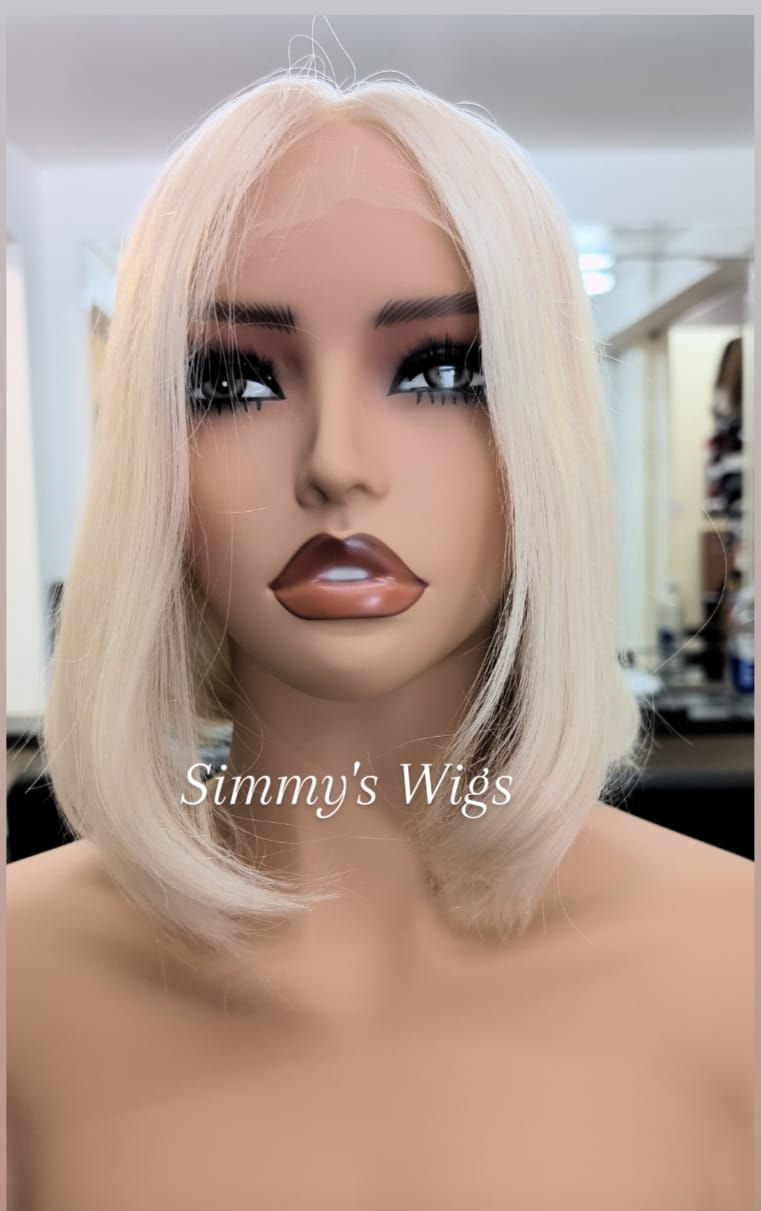
Beyond colour and length, pay attention to the cap. A lace front (a sheer panel at the hairline) creates an undetectable, natural-looking edge, while a monofilament top (a fine mesh that mimics the scalp) gives a realistic parting. Density and fit matter too — a wig that's the right size sits securely and comfortably all day.
Colour is best judged in natural daylight, which is why an in-person fitting is so valuable.
At Simmys Wigs London we offer free consultations at our Hendon salon, where you can try styles on, be colour-matched properly, and get honest, experienced advice — with free UK next-day delivery on every in-stock order. After 25 years, our goal is simple: to help you walk out feeling completely yourself.


Comments